


-
- News Center
- Related News
-
- Where to Buy 7075 Aluminium plate?
As a market professional with over ten years of experience in the aluminum processing and export industry, I'm frequently asked by clients: "Where can I buy 7075 aluminium plate with high quality?" This seemingly simple question hits the nail on the head—7075, as an Al-Zn-Mg-Cu series ultra-hard aluminum alloy, is a core material in aerospace, high-end molds, and other fields. However, its procurement market is rife with problems such as substandard composition and falsified condition data. Choosing the right supplier is far more important than worrying about price. Based on Haomei Aluminum's production and export experience, I've outlined the key procurement points from a technical perspective to help you accurately find reliable sources.
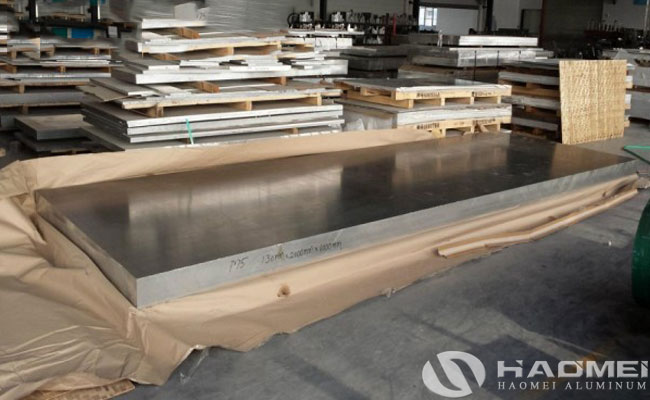
To judge the quality of 7075 aluminum plate, first focus on three core technical indicators, which are also the hard standards for selecting suppliers.
First, the chemical composition is crucial. The content of zinc, magnesium, and copper directly determines strength. High-quality products must strictly adhere to the GB/T 3190 standard, with zinc content controlled at 5.1-6.1%, magnesium at 2.1-2.9%, and copper at 1.2-2.0%, with total impurities ≤0.5%. Some smaller factories reduce the addition of alloying elements to cut costs, resulting in insufficient tensile strength and easy cracking during subsequent processing.
Second, the heat treatment state is important. T6 and T73 are the mainstream types. T6 has a tensile strength of over 607MPa, suitable for statically stressed mold applications. T73 has 10 times the corrosion resistance of T6, making it suitable for aerospace and marine equipment. Buying the wrong state is more dangerous than buying a counterfeit sheet.
Finally, processing precision is essential. High-quality 7075 aluminum sheets require a thickness tolerance accurate to ±0.05mm, a flatness error ≤0.1mm/m, complete stress elimination, and no deformation after cutting.
Based on these technical standards, where can you buy reliable products? Prioritize manufacturers with full-chain capabilities. Taking Haomei Aluminum as an example, we employ permanent magnet stirring technology from the aluminum ingot smelting stage to ensure uniform composition and no segregation. In the heat treatment stage, we use professional aging furnaces to precisely control the T6/T73 temper parameters. Each batch of products comes with a third-party mechanical property test report, clearly showing tensile strength, hardness, and other indicators. For export customers, we can also match international standards such as ASTM and EN, and provide NADCAP certification documents to meet aerospace-grade procurement requirements.
When purchasing, it's also important to avoid these industry pitfalls: Beware of "low-price temptations"—products priced 30% below the market average are likely to have reduced composition or be counterfeit 6061; reject "vague state" claims—require suppliers to clearly label specific states such as T6/T73/T651 to avoid being misled; value after-sales support—reputable manufacturers will provide processing technical support to solve compatibility issues in cutting, anodizing, and other processes.
Ultimately, the core of 7075 aluminum plate procurement is "technical matching + quality traceability." Whether it's the stringent requirements of aerospace or the precision demands of high-end molds, choosing a manufacturer like Haomei Aluminum, with its mature production processes, comprehensive testing systems, and extensive export experience, is crucial to mitigating risks from the outset. If you're looking for a stable supplier of 7075 aluminum sheets, consider starting with verifying their technical parameters to ensure professional quality safeguards your production.
- Haomei aluminum
- haomei Aluminium Plate