


-
- News Center
- Related News
-
- 7075 T651 Aluminum Properties Comprehensive Analysis
As a technician with many years of experience in aluminum processing, 7075-T651 aluminum alloy is, in my eyes, a "performance benchmark" for high-stress applications. Belonging to the Al-Zn-Mg-Cu series of ultra-hard aluminum alloys, 7075-t651 aluminum achieves breakthroughs in strength and stability through precise heat treatment and composition ratios, making it widely applicable in high-precision fields such as aerospace and mold making.
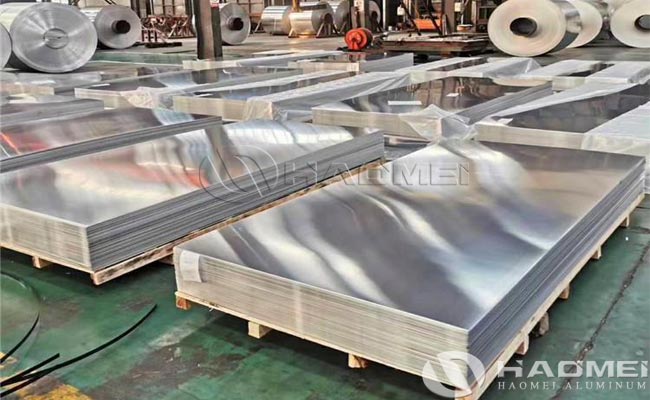
Composition is the foundation of performance. 7075-T651 uses aluminum as its base, with zinc (5.1%-6.1%) and magnesium (2.1%-2.9%) as core strengthening elements, combined with 1.2%-2.0% copper and 0.18%-0.28% chromium, with strict impurity control (silicon ≤0.4%, iron ≤0.5%). The MgZn₂ precipitate formed by zinc and magnesium is the core of strength, copper optimizes the distribution of the precipitate, and chromium refines the grains to improve toughness. Its density is stable at 2.9 g/cm³, only about one-third that of steel.
The heat treatment process determines the final properties. Based on T6 solution aging (480-490℃ solution treatment + 120-130℃/24-hour aging), it adds a 1.5%-3% pre-stretching treatment, which is the core meaning of the "51" designation. Pre-stretching reduces residual stress from 200-300MPa in the T6 temper to below 50MPa, preventing warping after machining—a crucial characteristic for precision mold production.
Mechanical properties are among the best in aluminum. Measured tensile strength reaches 572MPa, yield strength 503MPa, and hardness 150HBW, approaching that of ordinary steel but lighter. Fatigue strength is 159MPa, capable of withstanding high-frequency load cycles; elastic modulus is 71.0GPa, shear strength 331MPa, but ductility needs compromise; elongation at break is approximately 11%, and bending radius must be controlled ≥3.5t, otherwise grain boundary cracking is likely.
Physical and processing properties require precise matching with the process. With a coefficient of thermal expansion of 23.6 μm/m·K, a melting point of 475-635℃, and a thermal conductivity of 130 W/m·K, it is lower than aluminum alloy 6061. Temperature rise during machining must be controlled to prevent deformation. It can be anodized, but color difference control is difficult, and its weldability is poor, typically requiring mechanical joining. During production, we allow for additional machining allowances and use carbide cutting tools to prevent edge chipping.
Applications of 7075-t651 aluminum plate are highly focused on high-end fields. In aerospace, it is used for wings and fuselage load-bearing components; in mold manufacturing, it is adapted for high-rigidity tooling; and it can also be used to produce high-end sports equipment. However, its corrosion resistance is moderate, requiring avoidance of harsh environments such as salt spray. When purchasing, it is essential to verify the heat treatment curve report to prevent performance failures due to aging temperature deviations (±5℃ affects strength by ±15%).
In summary, 7075-T651 aluminum alloy is the preferred choice for "strength-first" scenarios. Although processing costs are high and ductility is limited, through scientific process adaptation, its specific strength advantage can be maximized, which is the core reason why it is irreplaceable in high-end manufacturing.-
- pre:pre:Where to Buy 7075 Aluminium plate?
- Next:next:7075 0 Aluminum Sheet
- Haomei aluminum
- haomei Aluminium Plate